


The Flavors of Fall in San Miguel With Chef Gaby Green

As temperatures begin to drop in San Miguel de Allende, the food changes too. Light summer dishes give way to warming soups, slow-cooked broths, moles, tamales and steaming cups of atole.

For chef Gaby Green, autumn arrives through the ingredients filling the markets and the comforting dishes returning to local kitchens and restaurant menus.
“Sopa de calabaza, caldo de cadera, mole de olla and pozole announce the arrival of fall for me,” she says.
We asked Gaby what visitors should look for during the season, how she incorporates autumn’s fruits and vegetables into her cooking, and why food plays such an important role in her Día de Muertos altar.
What to Eat in San Miguel This Fall
As the cooler weather arrives, Gaby recommends looking for the dishes that warm both the kitchen and the table: soups, broths, moles, tamales and atoles.
Among the seasonal dishes visitors may find in San Miguel’s restaurants are:
Sopa de calabaza: A creamy, comforting squash soup that highlights one of autumn’s most versatile ingredients.
Caldo de cadera: A richly seasoned regional goat broth traditionally associated with the fall season.
Mole de olla: A hearty, aromatic stew made with meat, vegetables and dried chiles.
Pozole: A warming hominy-based soup served with fresh garnishes such as lettuce, radish, onion and lime.
Tamales: Prepared with a wide variety of savory and sweet fillings and especially satisfying as the evenings grow cooler.
Atole: A warm, corn-based drink that may be flavored with vanilla, chocolate, fruit or other seasonal ingredients.

Although chiles en nogada are most closely associated with Mexican Independence celebrations in September, Gaby says they often remain available later in the year. Poblano chiles and pomegranates are still in season, allowing restaurants to continue offering the dish—sometimes through December.
This makes October and November an especially interesting time to eat in San Miguel. The last flavors of the Independence season overlap with the warming dishes, fruits and preparations of fall.
Gaby’s Favorite Seasonal Ingredients

One of Gaby’s favorite autumn ingredients is calabaza de Castilla, a Mexican winter squash often used in soups or slowly cooked with piloncillo until sweet, tender and fragrant.
Guavas are another favorite. Gaby enjoys them blended into agua fresca, eaten fresh, or baked into a warm guava crumble.
Mandarins are also at their best during the season. Their segments can brighten a salad, while a mandarin compote preserves their flavor for the colder winter months.
Pears require very little preparation to become something special. Gaby cuts them in half, removes the seeds to create a small hollow, fills each one with blue cheese and bakes them for approximately 15 minutes.
“Delicious!” she says.
Together, these ingredients show how varied autumn cooking in San Miguel can be. It is not only about heavy dishes. The season also brings bright citrus, fragrant fruit, earthy squash and combinations of sweet and savory flavors.
Food as Memory During Día de Muertos
For Gaby, the most meaningful part of Día de Muertos is building the altar and carefully choosing what to place on it.
“My favorite part of celebrating Día de Muertos is constructing the altar,” she says. “You truly think about your dead with affection and place an object, a drink or a favorite food there. Their soul comes to visit, and we remember who they were.”
Alongside photographs and candles, Gaby includes objects that belonged to her loved ones and the foods and drinks they enjoyed during their lives.
Traditional offerings may include mole, tamales, atole, Pan de Muerto and seasonal fruits such as guavas, tejocotes and sugarcane. A favorite liquor or cigarettes may also be included if they were part of the person’s life.
These details are what make an altar personal. It is not simply a display of traditional objects; it is a portrait of the person being remembered.
“The altar is a tribute to them,” Gaby says.
Gaby Green’s Pipián Verde con Pollo
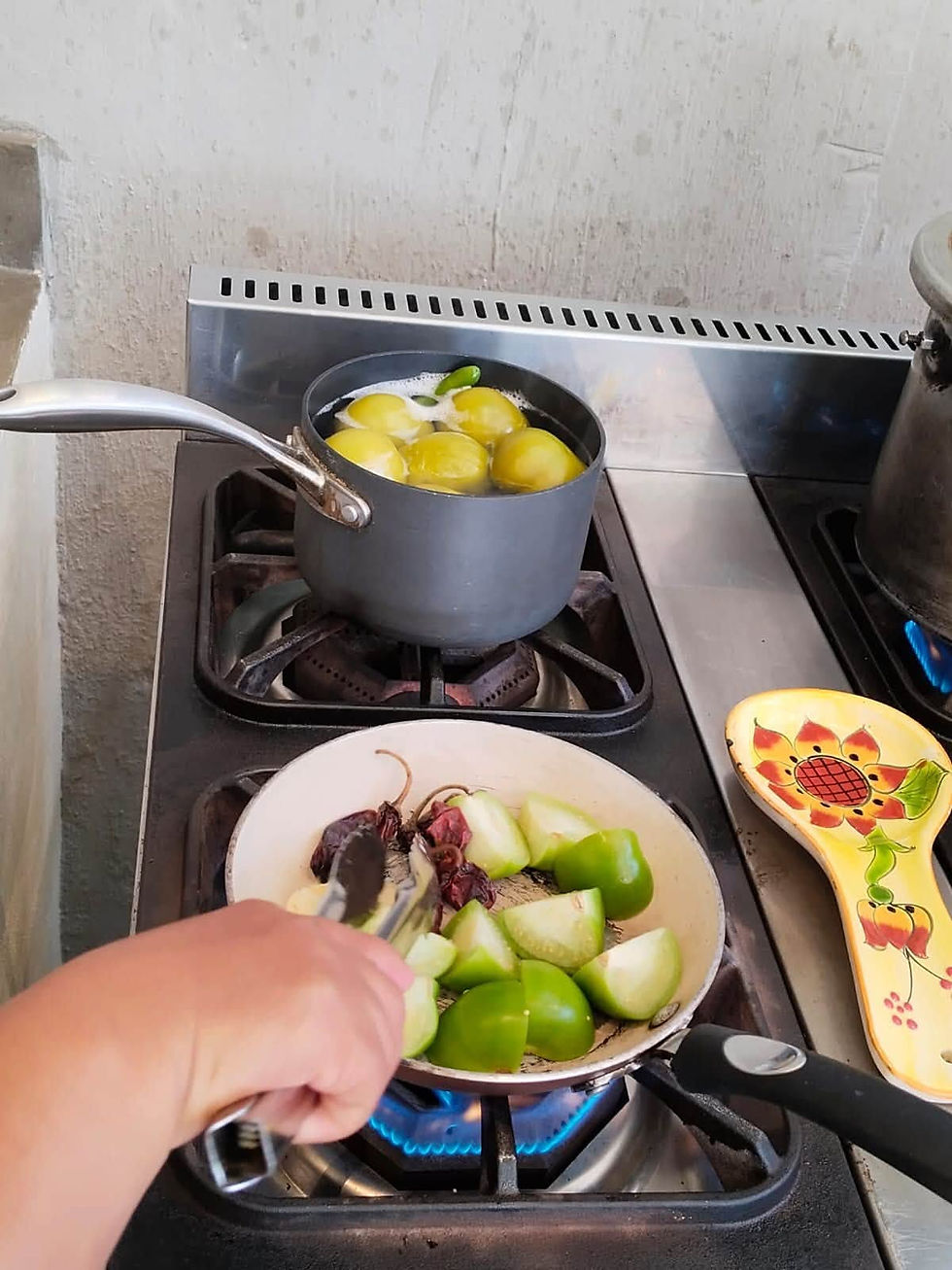
Gaby also shared her recipe for pipián verde con pollo, a fresh green mole made with toasted pumpkin seeds, tomatillos, serrano chiles, cilantro and spinach. It is comforting enough for cooler weather while still tasting vibrant and fresh.
Ingredients
¾ cup raw pumpkin seeds, or pepitas
½ kilogram tomatillos
1 to 5 fresh serrano chiles, depending on your preferred heat
6 sprigs cilantro
1 green onion
2 garlic cloves
2 handfuls fresh spinach
1 tablespoon sea salt, divided or adjusted to taste
1 chicken breast
2 liters water
½ head garlic for cooking the chicken
1 tablespoon cooking oil
Preparation
Bring two liters of water to a boil in a large pot. Add the chicken breast, salt and half a head of garlic. Cook for 20 to 30 minutes, until the chicken is tender but still firm.
While the chicken cooks, toast the pumpkin seeds in a dry nonstick pan for approximately 10 minutes, stirring constantly so they do not burn. Transfer them to a plate and allow them to cool.
Grind the toasted seeds in a blender until they have a fine, powder-like texture. Set aside.
Remove the husks from the tomatillos, wash them and cut them into quarters. Add them to a blender with the serrano chiles, cilantro, spinach, green onion, garlic cloves, sea salt and approximately ¼ cup water. Blend until smooth.
Heat the oil in a sauté pan. Add the ground pumpkin seeds and cook gently, stirring constantly. Slowly add the fresh green sauce, continuing to stir over low heat with a wooden spoon.
If necessary, add a little hot water or chicken broth, but keep the mole thick and velvety.
Cut the cooked chicken into medallions and arrange them on a serving plate. Spoon the warm pipián verde over the center of the chicken—or cover it completely.
Buen provecho!
Taste the Season
Fall in San Miguel can be experienced through its flowers, celebrations and colorful altars—but it can also be tasted.
Look for chiles en nogada while pomegranates are still in season. Order a bowl of pozole, mole de olla or pumpkin soup on a cool evening. Stop for tamales and atole, bring home fresh mandarins and guavas, or try Gaby’s blue cheese-stuffed pears.
And when creating a Día de Muertos altar, choose offerings that tell a genuine story. A person’s favorite mole, fruit, drink or sweet can hold as much meaning as any traditional symbol.
In Gaby’s kitchen, food connects the season’s changing ingredients with something timeless: the people we love, the meals we shared and the memories that remain at the table.
Cook With Gaby
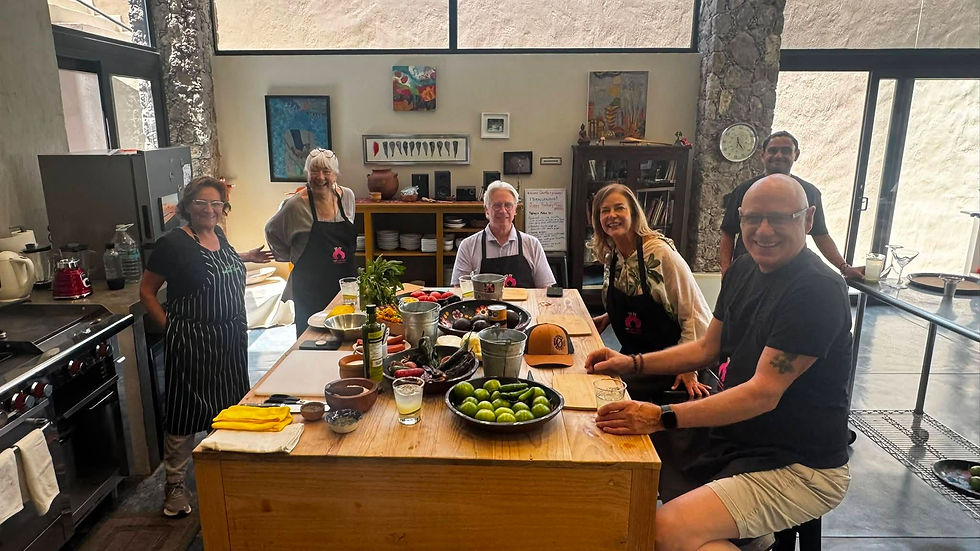
Want to explore the flavors of San Miguel in the kitchen? Join Gaby for a cooking class or private culinary experience and learn to prepare Mexican dishes through her creative, deeply personal approach.
Click here to learn more and cook with Gaby.


Comments